Details will be provided soon but here are the dates:
Wednesday 10th June: Visit to Rhodd’s Farm near Kington
Friday 3rd July: Evening visit to Glebe House, Llanvair Kilgeddin courtesy of Joanna Kerr
Tuesday 21st July: Visits to Damson Farm near Batheaston & Iford Manor.
Thursday 6th August 10am: Visit to Horatio’s Garden at Llandough Hospital
All visits are self-drive with as much car sharing as possible. In all cases we will be given a guided tour with owners/head gardeners. Refreshments provided.
Garden Club Visits 2025
Visit to Wildegoose Nursery & Stockton Bury Garden: Sat 9th August 2025
Jack and Laura Willgoss of Wildegoose Nursery, Shropshire have both given inspiring talks for us over the years. And Tamsin Westhorpe gave us a very informative talk on the garden at Stockton Bury in March of this year, so we decided to arrange a combined summer visit to see both Wildegoose nursery and Stockton Bury garden.
We started off with tea and a delicious selection of cake at Wildegoose Nursery with such a wonderful talk from Laura in the garden about the history and ethos of the garden and nursery. We learned all about matrix planting and stress-tolerant plants, how this year with the prolonged hot, dry spell has been a poor year for annuals, and how areas of the garden have coped well with zero irrigation. Truly inspiring and food for thought.
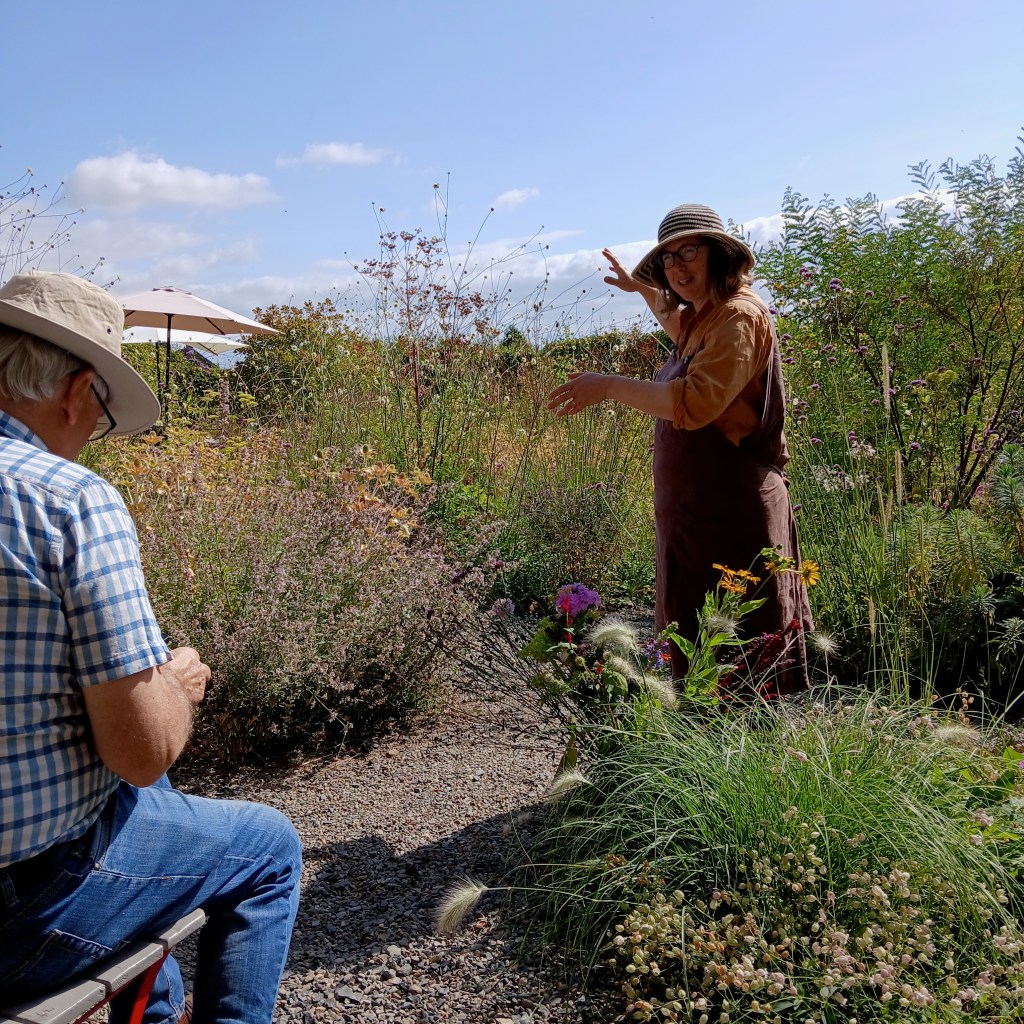
We were enthused by the immersive tall planting and naturalistic effect achieved by thoughtful use of self-seeders, which get edited during the winter. Cutting back is left until the end of January to provide safe havens for wildlife. Do we need to buy bird feeders when they can forage amongst the seedheads? We were reminded that robins eat insects and how important it is to provide suitable habitat in our gardens (and nurseries). We were also reminded about the importance of protecting our soils and not upsetting the mycorrhizal fungi, so at the nursery they protect soils by using the chop and drop in situ method of mulching.
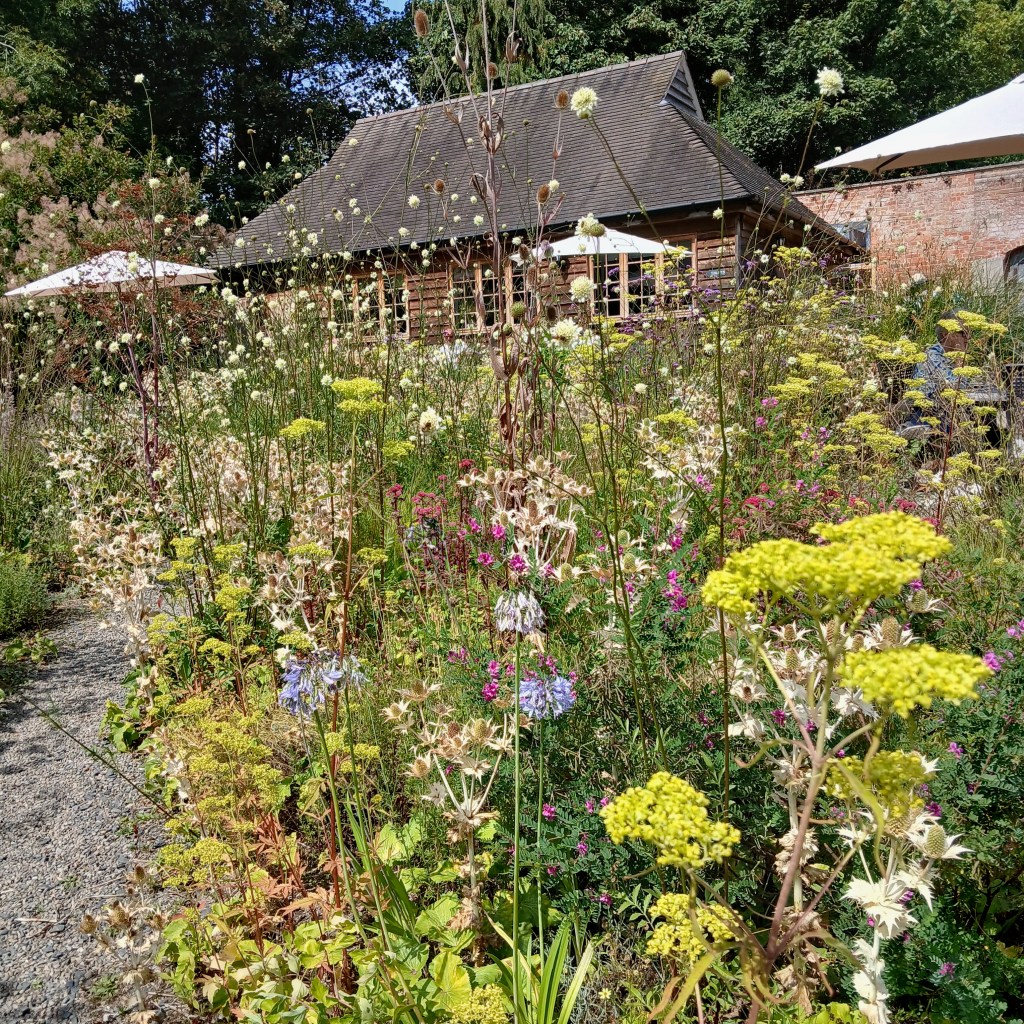
We thoroughly enjoyed exploring the glorious garden…and bought a few plants! Cephaloni dispacoides (Giant scabious) in my case (Sue), which was looking stunning in the garden below the tea room.
In the afternoon we were greeted by Tamsin at Stockton Bury Garden and given a guided tour. It was fascinating to hear about the history of the garden, which has been in the family for many generations.
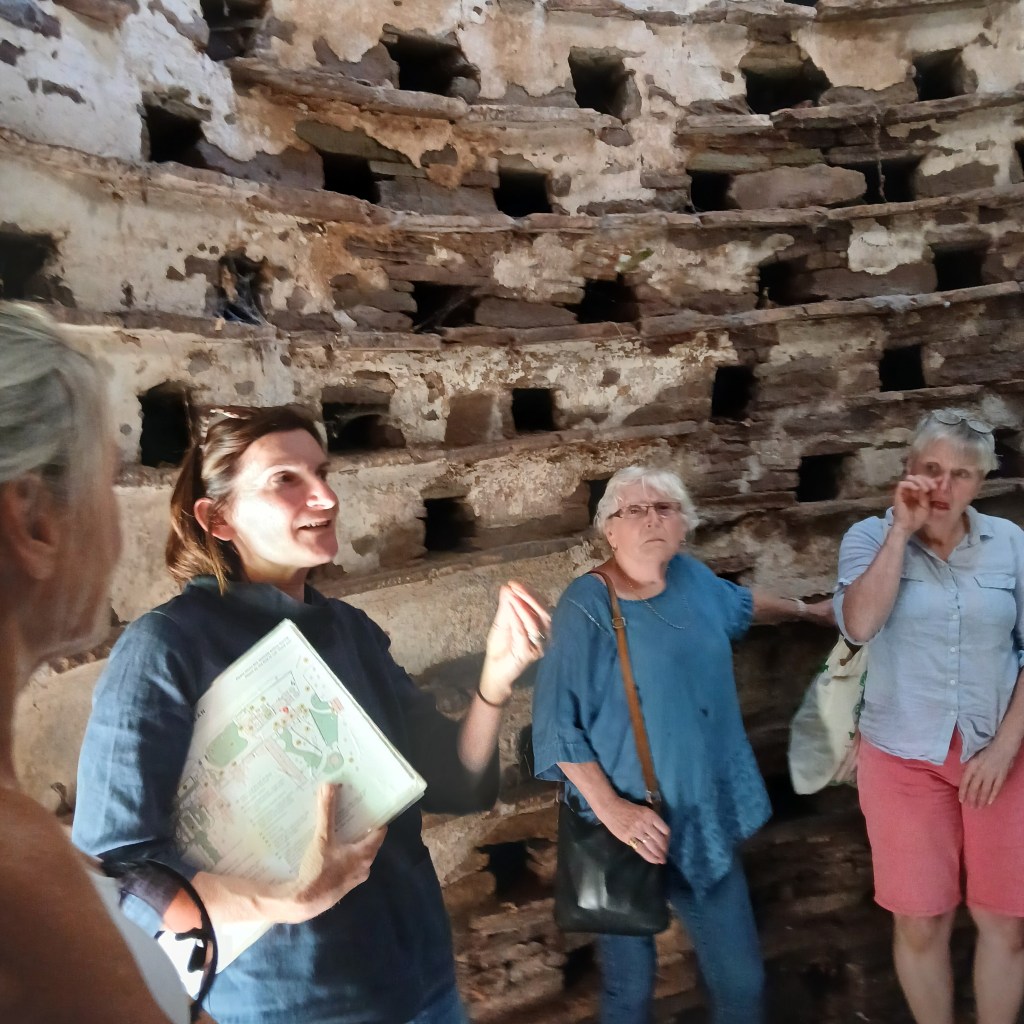
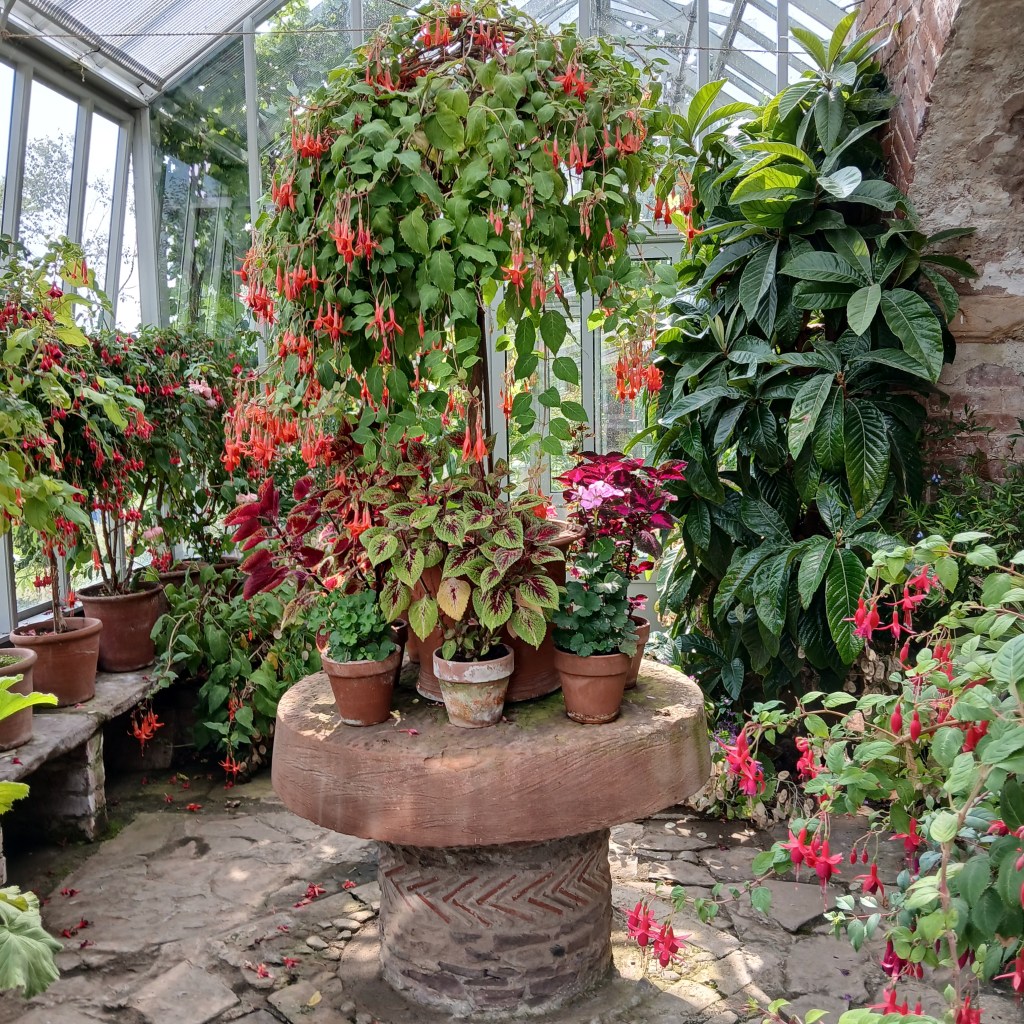
Tamsin’s stories of looking after the gardens with her Uncle Raymond (as seen recently on Gardeners World) made it a memorable visit. For example, only one half of the greenhouse has a summer display of flowers (as in pic) because Uncle Raymond uses the other half, as he has always done, to grow his early potatoes!
_________________________________________________________________________________
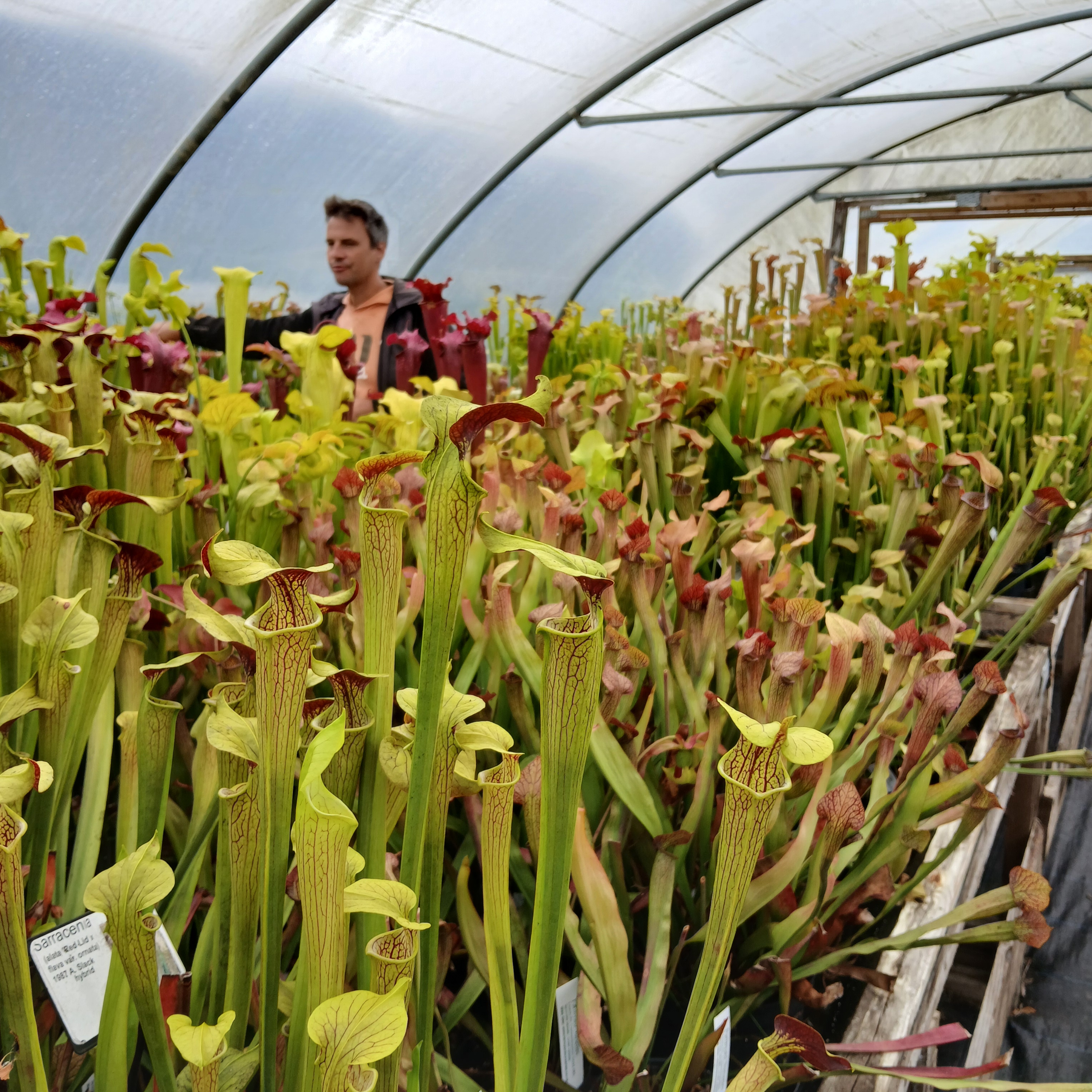
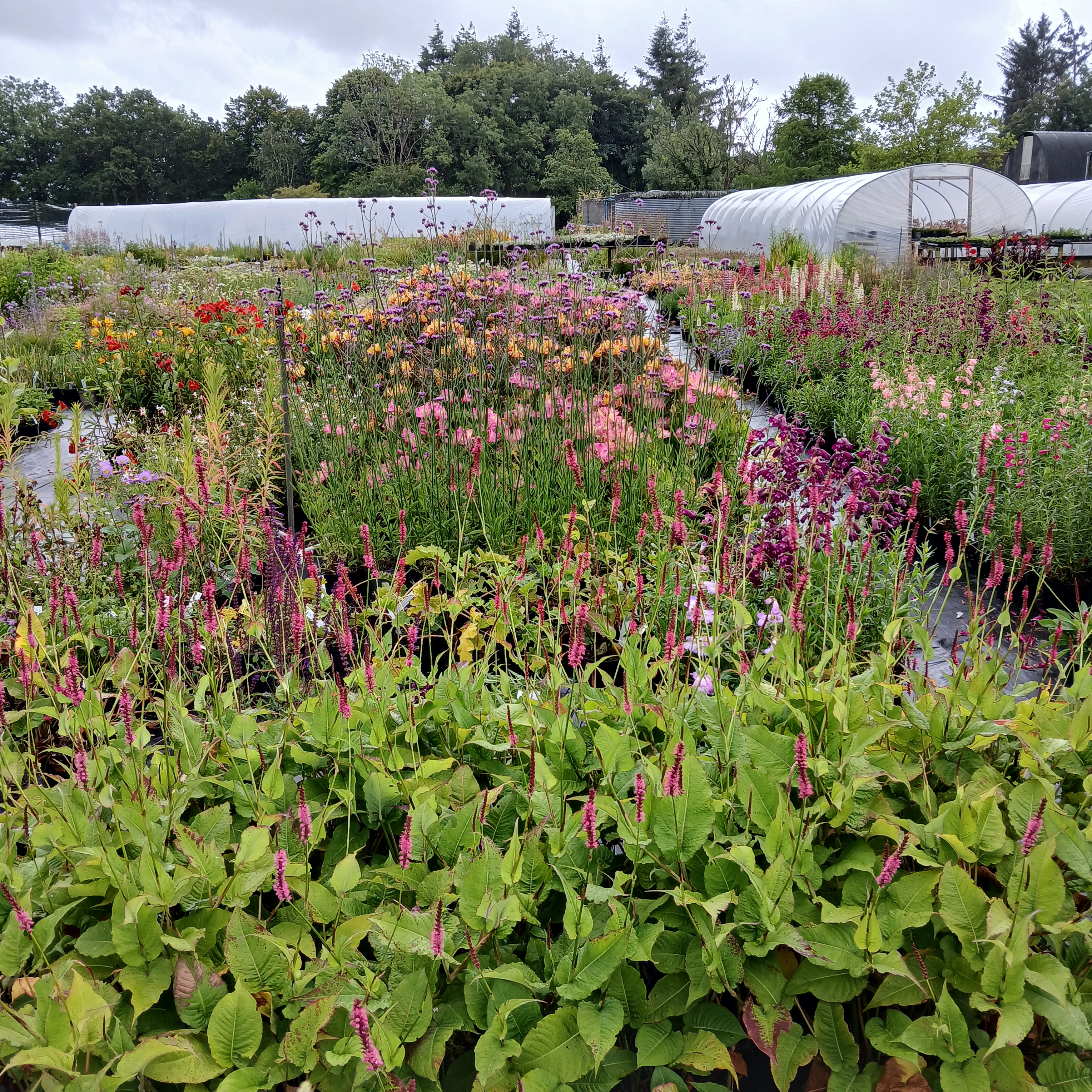
Our visit on 15th July to Farmyard Nursery in the wilds of Carmarthenshire and the National Botanic Garden was remarkable because it was the first wet day after weeks of scorching heat and because of the quality of the nursery. We spent hours exploring the acres of collections, all for sale, in polytunnels and outdoors. They have a large and busy team working at the nursery, some of them specialists, and all of them knowledgeable as well as helpful and very friendly. If you are interested in carnivorous plants it is the place to go – they have the National Collection of Sarracenias – but there is also have a huge range of unusual plants. Make sure you have plenty of space in the car if you go!
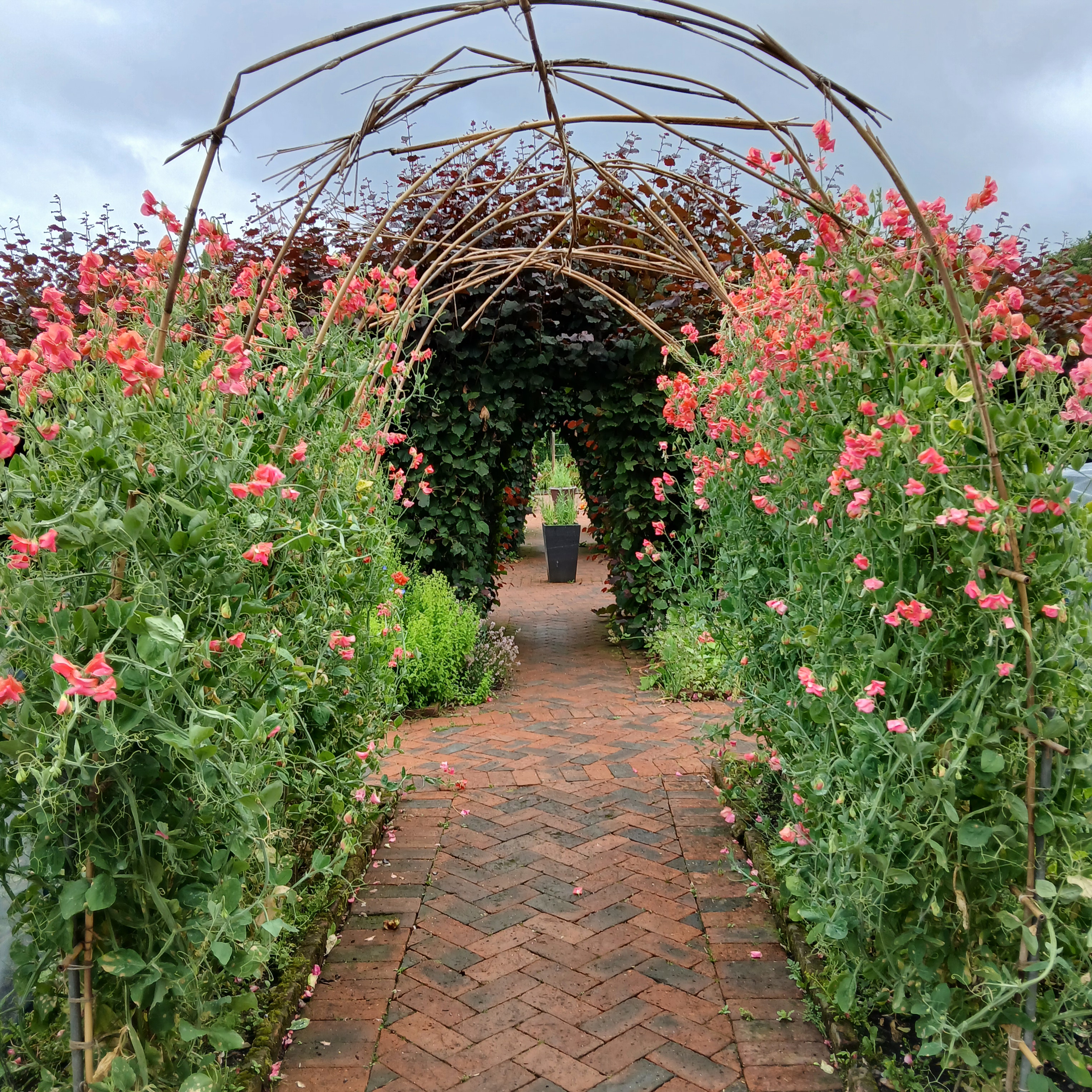
We had a quick look round parts of the Botanic Garden in the afternoon. The Walled Garden which contains the productive garden and an interesting collection of important species was looking good. Other parts of the garden are unfortunately showing symptoms of underfunding. But it is still an exciting place to explore and the educational focus is admirable.
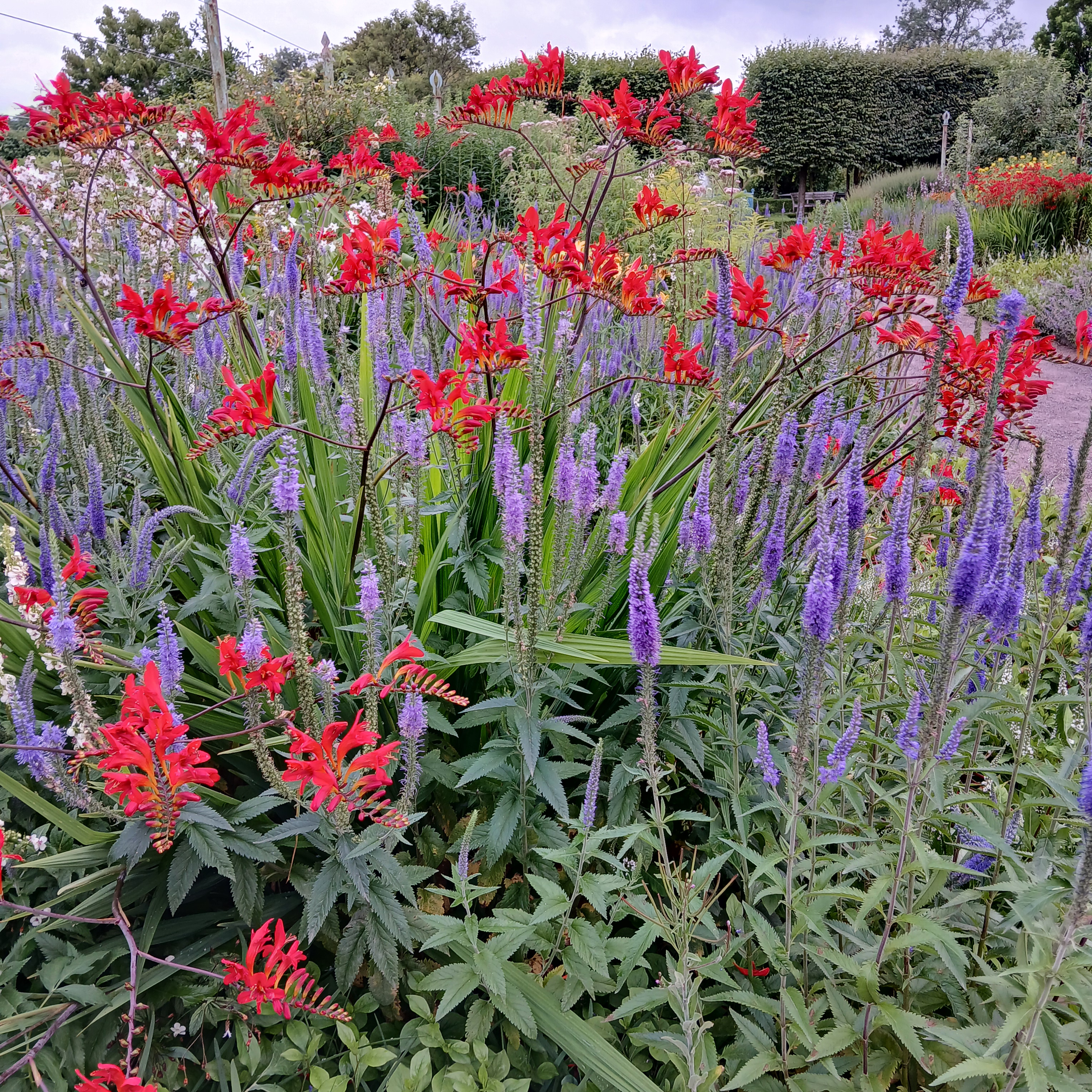
Visit to Jo McKerr’s garden at Church Farm, Wellow and Caisson Gardens: Tuesday 24th June 2025
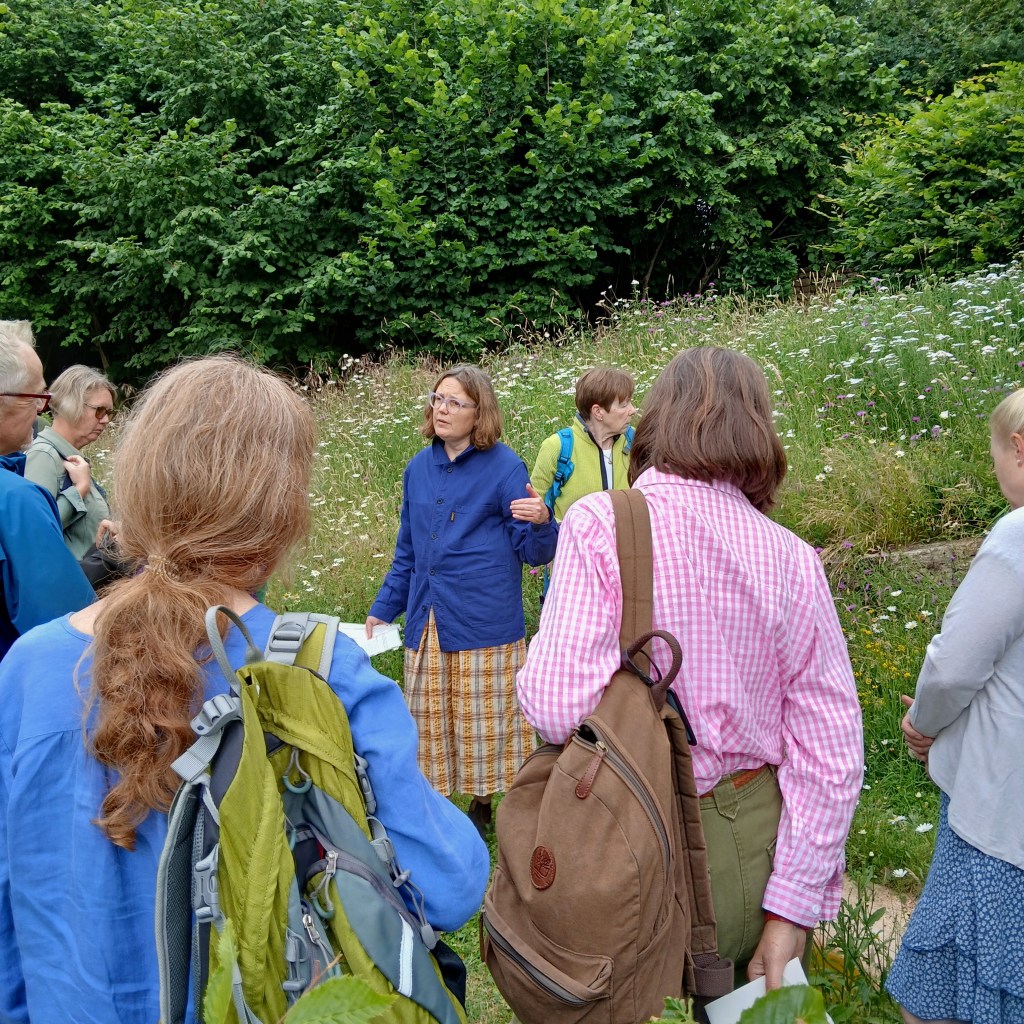
At Church Farm Jo led us on a one and a half hour tour of her remarkable garden. Jo’s garden (in her words) ‘aims to be a modern wildlife garden and is gardened following organic minimum intervention principles borrowed at adapted from regenerative agriculture; agroforestry; planting designers and pre-industrial farming techniques.’ I didn’t disappoint. Jo has created a large wildlife pool fed by recycled rainwater, a drought tolerant gravel garden (see pics below)
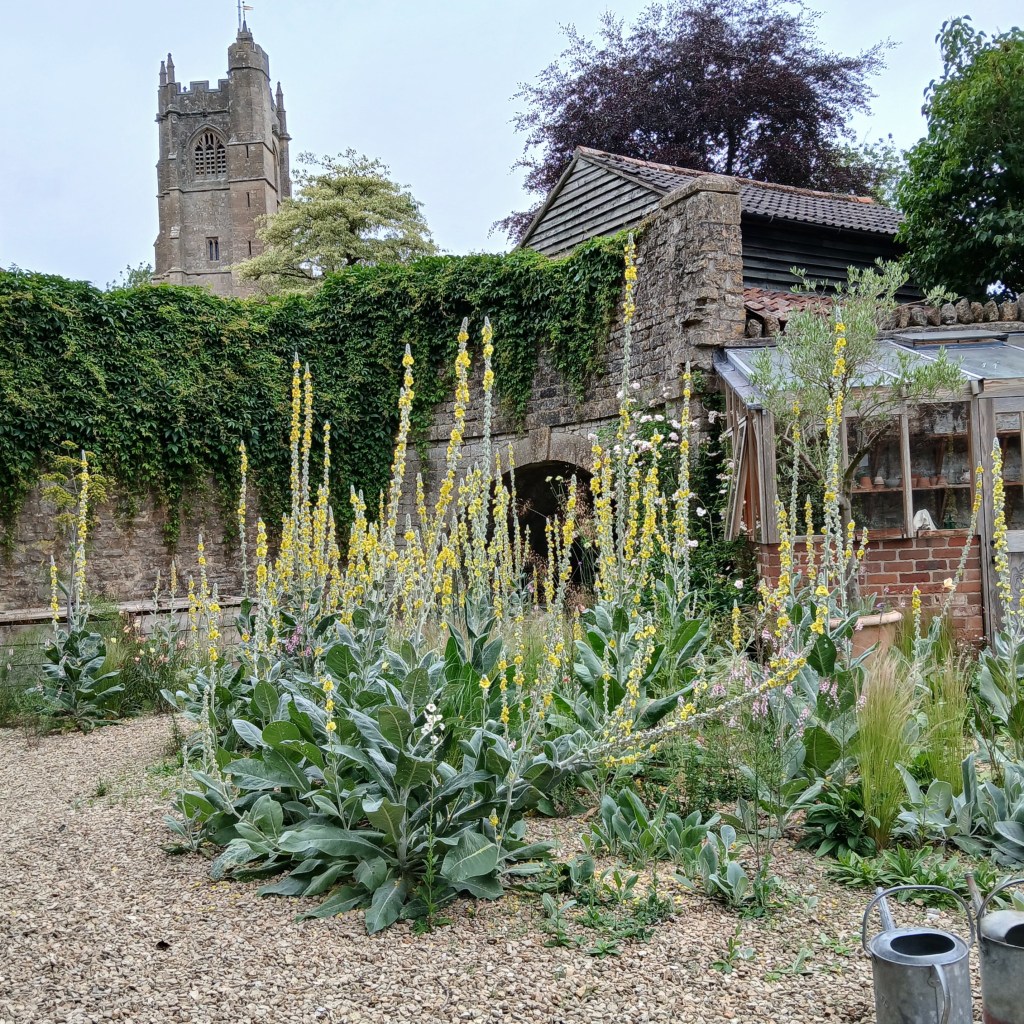
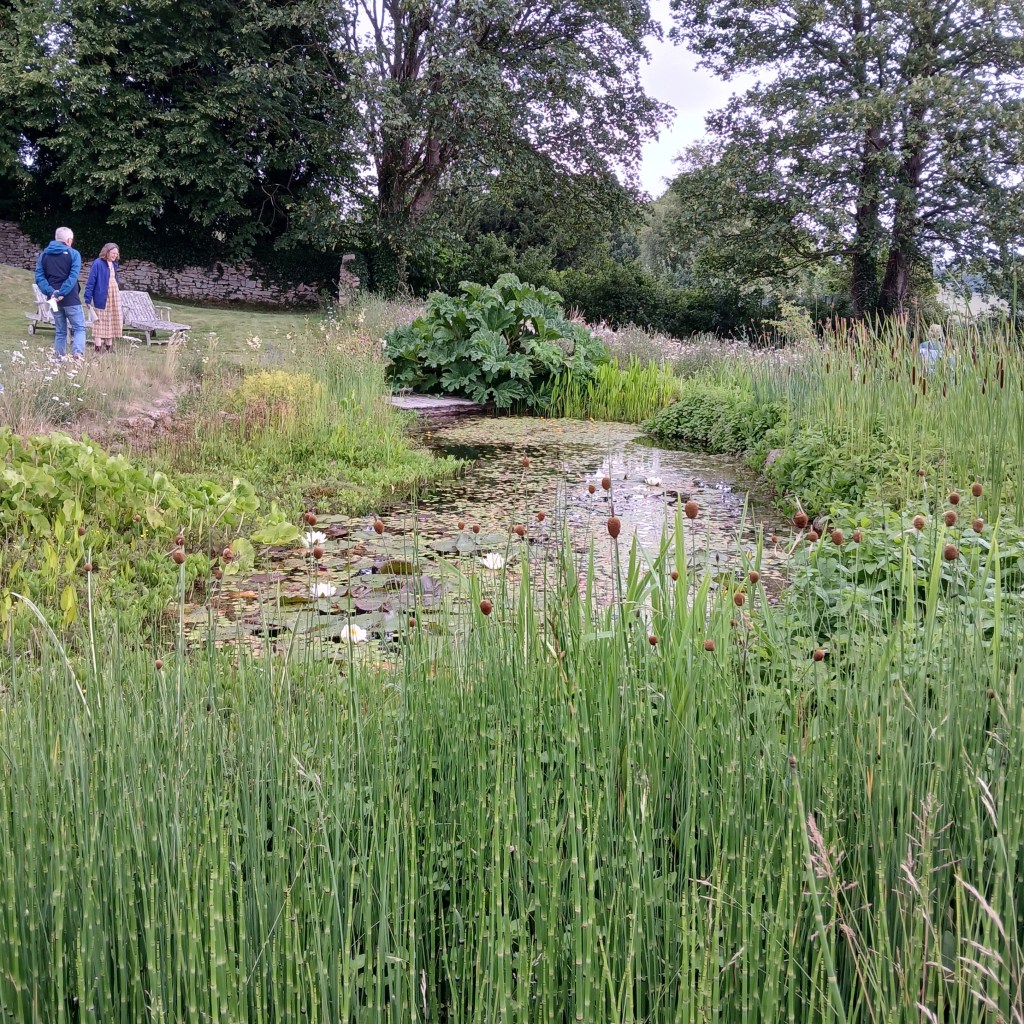
and large tracts of indigenous wildflower meadow planting.’ We had timed our visit perfectly: the meadows were at their peak and glorious. The pic below doesn’t do them justice.
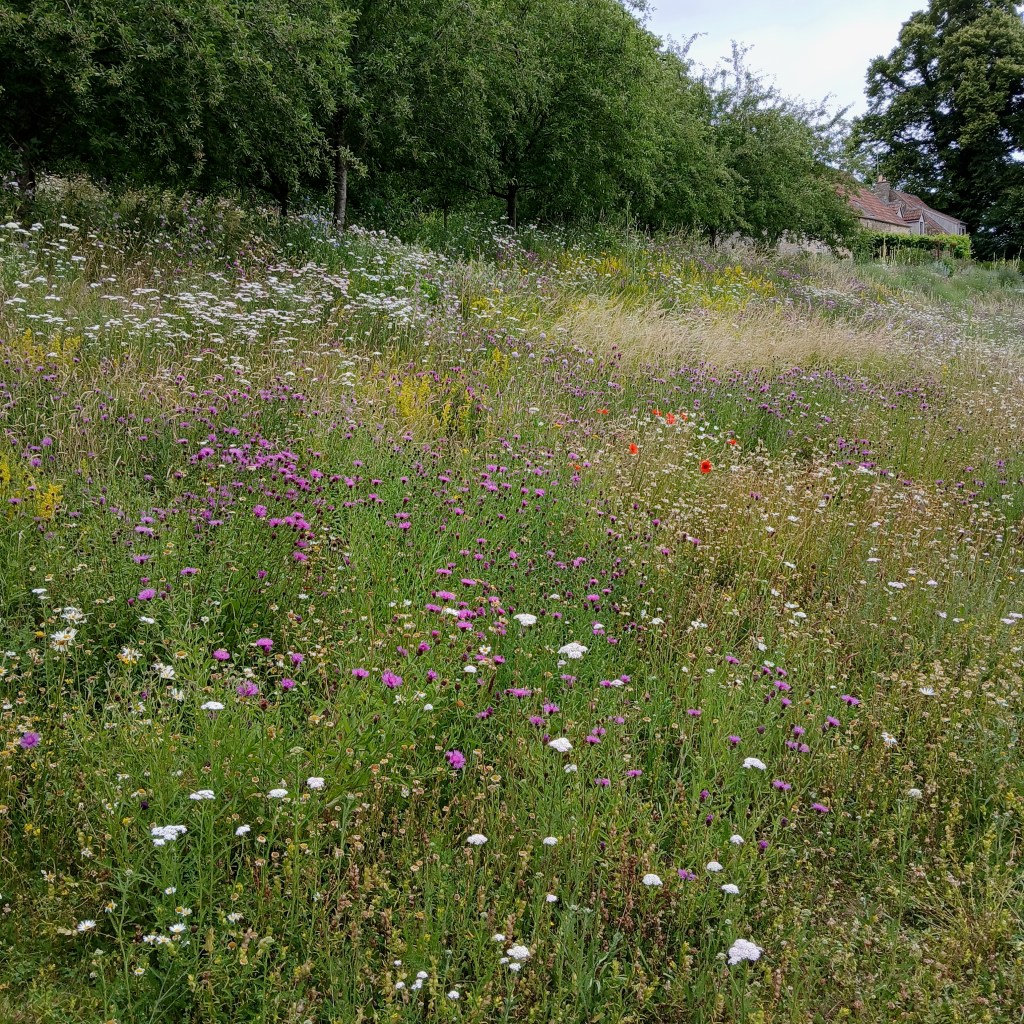
Jo explained that she has ‘tried to make a garden with what was here without using too many unsustainable resources or needing fertilisers or other chemicals to be maintained.’ She has created the most beautiful garden which provoked much discussion and admiration. Aesthetic and ecology in perfect balance. Jo later said that ‘ it was such a lovely group of engaged enlightened gardening folk.’
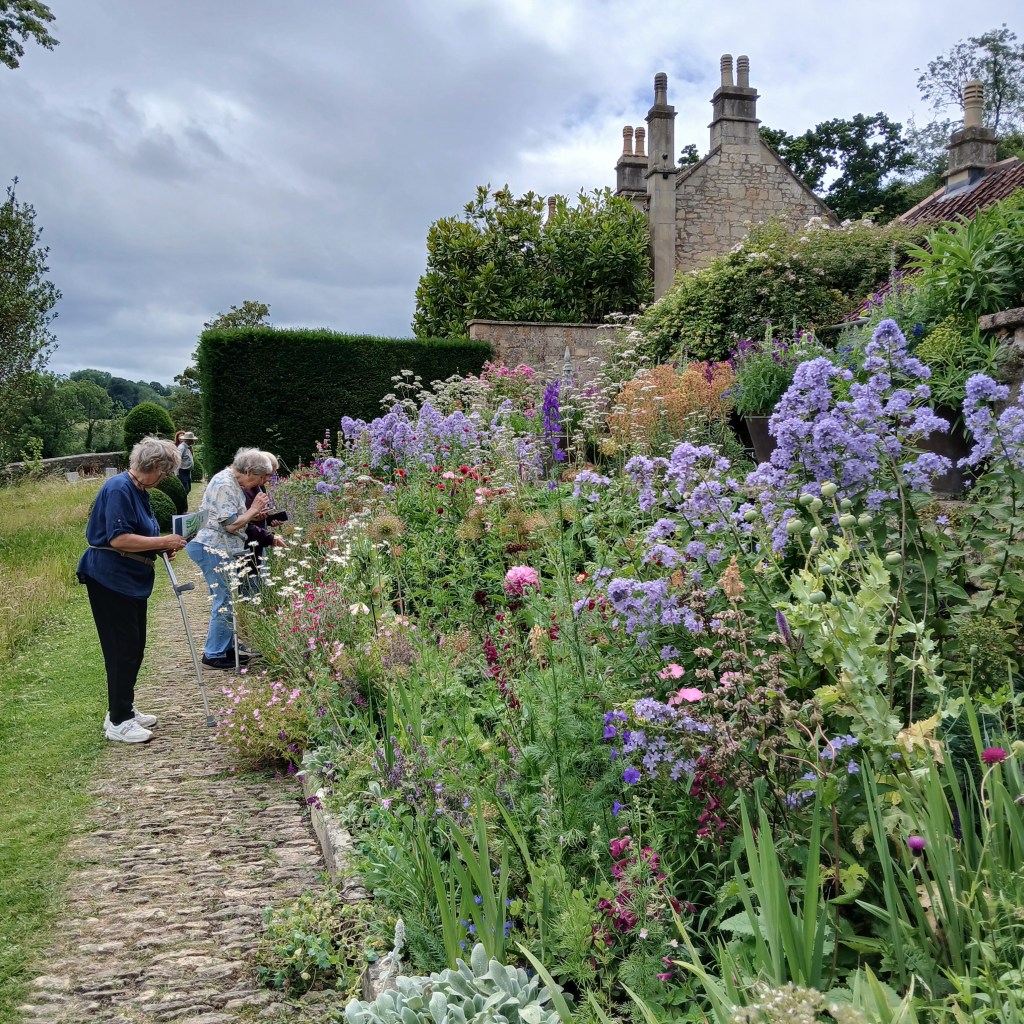
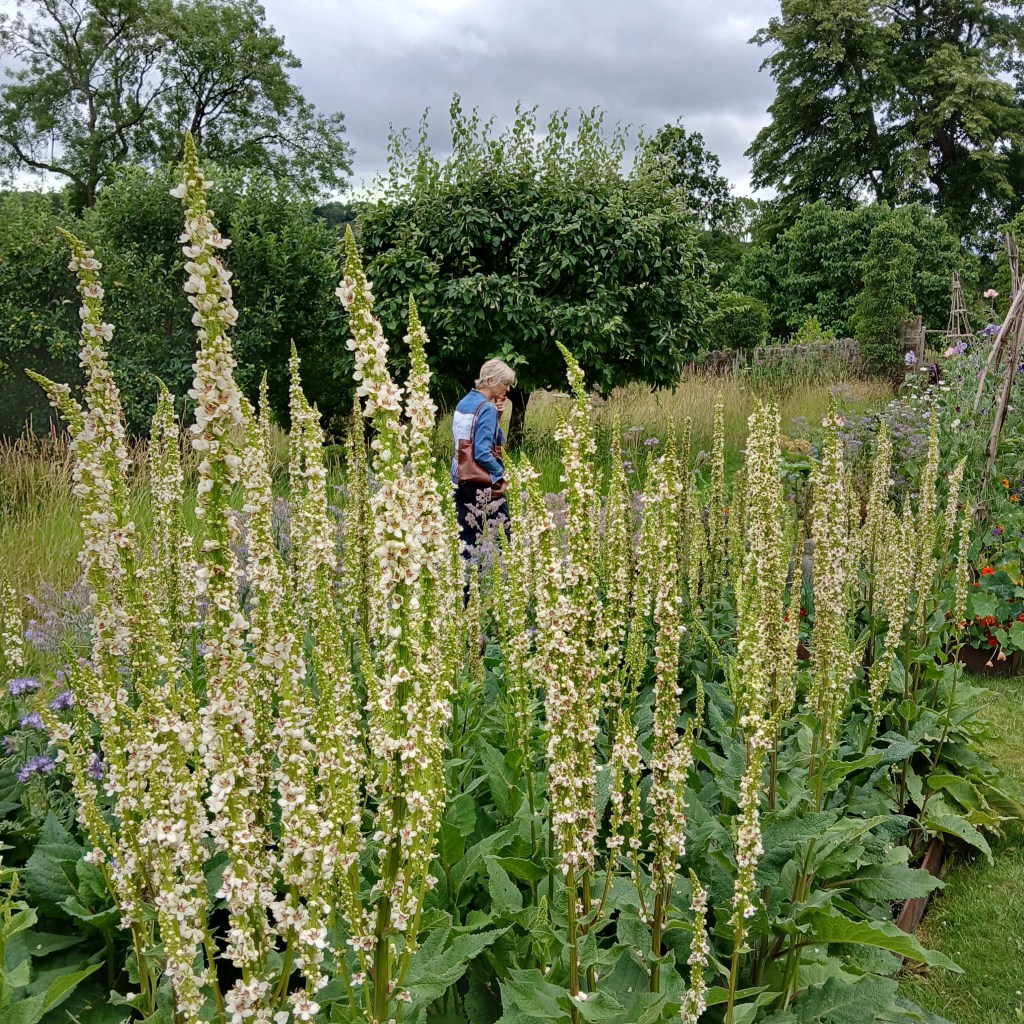
The afternoon was a return visit to Caisson Gardens where we given an introductory talk by Phil and allowed to meander on their own and discover the gardens at our own pace.
 llanthonygardenclub.org